
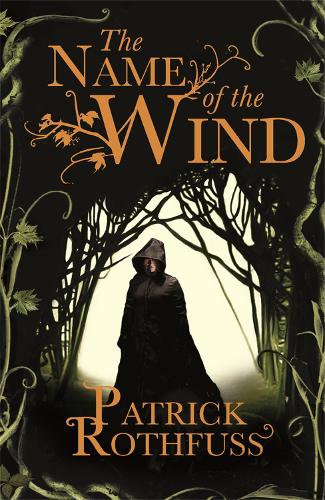
In this land some people believe in demons. A writer called the chronicler is interested in writing about them, particularly the most famous and supposed king-killer Kvothe. But this man is determined not to be found and is instead living in disguise training a demon. He agrees to tell his story to a writer over three days. Each of the books in the trilogy is one of these days.
For the first 300 pages or so I was on track to give this book a much higher rating, but then I spoke to my friend about this book and she told me she hadn’t enjoyed it because of the representation of Denna and other emale characters. Up until that point I’d found Kvothe quite endearing (and I still believe he was quite a sweet boy who went through quite a lot and had no time or idea about love) but the sexism really started to anger me and I wanted to tell him, and Rothfuss, he didn’t deserve a medal just for not jumping on a girl. Furthermore, this is a fairly long book and as the first one in a trilogy, there is definitely some story set up but more-so, Kvothe just rambles on about story after story and dramatic things happen but there isn’t usually consequences. Similarly, whenever you think his main ‘love interest’ is actually going to pay him some interest, nothing happens between them.
Rating: C+
SPOILER ALERT
Kvothe has disguised himself as an innkeeper Kote and is training Bast. The Chronicler runs into him and is attacked by a spider demon. Kote takes him to the inn and agrees to tell his story, the Chronicler is reluctant to give him the amount of time he requests but eventually agrees. He’s used to doing things quickly because he has his own complicated method of recording which Kote learns in only 15 minutes- hinting at just how interesting he is.
Kote began life in the Edema Ruh, a troupe of actors who were discriminated against by ignorant people despite being very smart. He finds an old man performing fake magic against the fearful mayor, but is more interested in how this man controls the wind. Kote tells him he can join their troupe and once Abenthy shows Kote’s father his amulet he is indeed allowed. Abenthy teaches him first the power of belief before he can learn a type of magic called sympathy.
At this point of the story Chronicler and Bast meet and get in a fight where Bast transforms into an animalistic demon but Bast is grateful Kvothe is finally telling his story so they decide to get along.
Abenthy decides to marry a woman and leave the troupe. Soon afterwards Kvothe loses all the other parental figures in his life when he returns to find the camp burnt because his parents have been writing songs invoking the names of demons. The killers are still there and want to kill Kvothe but their demon master stops them. So Kvothe escapes and lives alone in the forest but one day a man and his son Jake pick him up when he needs to go to town for lute strings. They say he can go home with them but is afraid and runs away. After being beat up he thinks of going back to them but is too late. He begs on the streets and tries pretty badly to steal. There is one kind man in town Trapis who offers a safe haven when they need it. One day he travels to the wealthy side of town and is given a lot of money by a pitying woman then almost immediately loses it when he is attacked. As luck would have it, someone gives him another and he goes to an inn but is again scared of contact so runs back to Trapis.
However, when Trapis tells them the story of how their chief god Tehlu killed the demon Encanis, Kvothe begins to suspect he is a priest. Another old man Skarpi tells stories too, stories Kvothe had thought were false but now it seems to fit together that Lanre is in fact Haliax and that he led the group who killed Kvothe’s parents. But some Justices hear Skarpi’s stories and arrest him. He tells Kvothe to run up to the roof. Now alone he decides he needs to sell the copy of the book Abenthy gave him, which grants him firstly a night in an inn and a bath. Smelling better, he walks into a tailors in just a towel but with the air of a noble and negotiates for some excellent clothes at a lower price. He returns to Hillside for shoes, the shoemaker is well used to seeing feet and immediately knows he is not a noble. He tries to give him a pair of his son’s used shoes for free but Kvothe slips him some coins. Then he returns to say goodbye to Trapis before he leaves for the university as Abenthy always wanted him to, with a wagoneer called Roent and his family.
He quickly falls for a girl travelling with them, Denna. She spends some time with him, until another musician shows up, making it seem she’s into this man Josn. But when Kvothe leaves for the university she asks him to remain and when he says no she says she’ll find him some day. At the university he answers almost everything perfectly- which we think is just his talent at first but then we learn he spied on the previous applicants to learn the questions! The admission depends on talent, but he asks to be admitted for free and given extra money to buy supplies.
They agree to fund him, and he’s given a tour by a boy called Simm who becomes one of his best friends, along with another boy Wil. When Lorren asked Simm to give Kvothe the tour, I thought he was either going to beat him up or be very cold- I was pleseantly surprised at the friendship they formed. He also meets a man who’s been the lowest rank at the University for 50 years, Manet, but also makes a couple of enemies. Firstly, and dangerously, he acts too over-confidently for a teacher, Hemme, so Hemme puts him in front of the class to embarrass him and instead Kvothe uses magic to minorly hurt his teacher. But Hemme exaggerates what happened and Kvothe is brought before all the teachers and put forward for expulsion. He manages to bring down the seriousness and is in fact promoted to the Arcanum, his punishment only to be whipped instead.
Arwyl, in charge of the Medica, stitches him up but Kvothe already took a drug so he wouldn’t embarrass himself in front of the other students. Unfortunately this makes him weak in front of someone else who has a grudge against him, one of the librarians, Ambrose. The other librarian, Fela, had been very nice to Kvothe and when he sees Ambrose assaulting her he helps her make an escape. As he’s under the effects of the drug he doesn’t realise something is suspicious about Ambrose giving him a free open flame and he is then caught with this flame amongst the books- infuriating the head librarian Lorren. He had previously been one of the teachers whose support Kvothe could rely on but now there is no way he will teach him, in fact he bans him from the Archives, which has not happened to anyone in a long time.
Kvothe starts to work at Kilvin’s fishery making lamps. He wants to be taught by Elodin, who knows the Name of the Wind, but he seems a little, understandably, insane, as he was the youngest student ever admitted and the youngest to make chancellor but was then locked up. Kvothe thinks Elodin is testing his resolve by asking him to jump off the roof, and thinks the master will use the wind to save him, but instead he lets him break his bones and tells him he’s far too reckless to study under him so instead he studies in the Medica, learns languages with his friends, works in the Fishery, and later re-learns how to play the flute so that he can play in Imre, the city across from the university which is a cultural haven but disdains the magic of the university. He goes there for a loan from Devi, whom he expects to be a muscular man but is instead a young woman who used to be a member of the University too.
He tests out his music on a homeless girl he finds on the roof, Auri, and eventually tries for his pipes (which will allow him a reputation and to play for free at any nearby pub). He doesn’t have a singing partner so he hopes there is a talented woman who will sing the female part and after a sufficient dramatic pause, a woman does chime in. Even Ambrose cheating by magically snapping one string doesn’t stop him getting his pipes. He searches for the woman, who seems to be his true love, he’s very touchy about how Chronicler describes her. This woman, who we are fooled about several times, is actually Denna yet again. Except- she has been going by several names and despite her flirtation with Kvothe, whenever we see her she is going off with another man, this time, one of his close friends. The owner of the pub was also with her, and she is constantly leaving.
Meanwhile, his rivalry with Ambrose grows. With the rich man who wants to be his patron but already has too many musicians, Kvothe writes a satiric song, which Ambrose takes him back to the council of teachers for but this time his punishment is only to write a public apology letter for, and Kvothe revels in this to continue mocking his enemy. I thought that Ambrose was getting him back by ruining his lamp, which turns into a fire, but it seems to have only been an accident. But he really does send thugs after him. Luckily Kvothe escapes by dropping a bottle of brandy to create more fire, scaring them. Yet he doesn’t think he’s safe and so decides to run away.
He’s heard about a wedding where the Chandrian attacked, so heads this way and asks in an inn. They till him there was only one survivor, who was performing there- Denna! She says she needs to find her rich patron so they try to track him down. They find a swineherd, who hasn’t seen her patron. As advised, they head up to a high point and this time what finds them is a dragon- or so Kvothe desperately wants his audience to believe. It’s actually a draccus, which he said is only as dangerous as a cow but even if it’s not trying to hurt anything, it’s big and causing chaos. As they walk, Denna takes some food which she doesn’t realise is poison. He gives her coal as an antidote and monitors her but has to leave when their plan to use the poison on the draccus doesn’t work. He chases the dragon down to town and kills the draccus.
The townsfolk believe it to be a demon and see him as their saviour. But he returns to the university and meets with his friends, who point out some holes in Denna’s story but nothing comes of this. Almost immediately, Ambrose provokes him again by stealing and breaking his lute. The masters do something I didn’t understand for strange cruel reasons, they make him think he is expelled but then vote against their early decision five seconds later? They also make him re’lar because when he attacked Ambrose for this he used the wind against them, and Elodin finally agrees to teach him something.
In my opinion, Denna is utterly selfish, manipulative, and her behaviour makes no sense to me! Kvothe will think she’s dead, and when she next sees him she will act casually, messing him around and then introducing her new lover as though nothing deathly ever happened and she hadn’t just been flirting with him. The one time Denna sees him with a woman, Fela, who is thanking him for saving her (although to be fair she does seem to have a crush on him. Apparently jealous, Denna leaves him a letter telling him she’s met another man. Eventually Kvothe brings Mola, a friend from the Medica, to see Auri, but she is judgmental that he hasn’t told anyone else who could help the girl. Back in present day he goes to Fela’s room and wow, what a brave man, avoids the temptation to have sex with her. Fela helps him search the Archives, but we don’t really get any resolution on this because the next two books were clearly planned.
Back in present day a mercenary who stole from Chronicler a few days ago arrives at the inn so a huge fight breaks out and the man ends up dead. The smith’s prentice is the one who kills him, and he tells the group he thinks it’s a demon so I guess he’ll be important in the following books. Bast comes into Chronicler’s room at the end of the day and threatens him, telling him it is vital he reinvigorates Kvothe.
Quotes
“So this is the difference between telling a story and being in one… the fear.”
“The difference is between saying something to a person and saying something about a person. The first might be rude but the second is always gossip.”
“It was a hurt like tender fingers on lute strings. I bled a bit and hoped that I would callous soon.”
“Pride is a strange thing, and because generosity deserves generosity in return. But mostly because it felt the right thing to do, and that is reason enough.”
“Reputation is like a sort of armour, or a weapon you can brandish if need be.”
“Enjoying my failure more than they had the song itself. Such is human nature.”
“Power is okay and stupidity is usually harmless. Power and stupidity together are dangerous.”
 Into New Realms